How much does a heat pump cost?
A factory-built Greener Pod system starts from £11,500 ex VAT, including the heat pump, hot-water cylinder, hydraulics and controls. Installation is quoted separately by your approved installer, with eligible homes receiving £7,500—or £9,000 for qualifying off-gas-grid properties replacing oil or LPG heating—through the Boiler Upgrade Scheme.
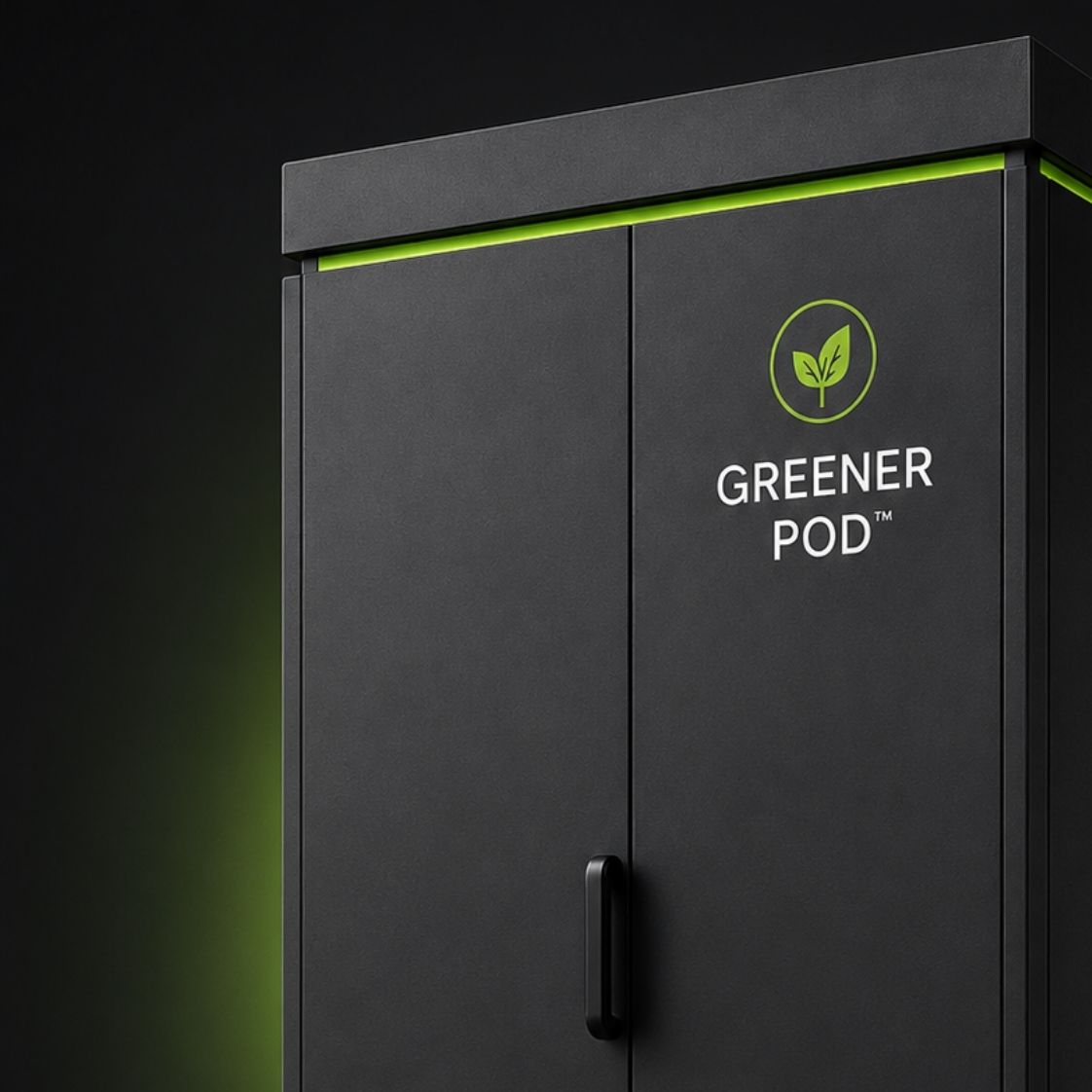
What a Greener Pod system costs
These are our standard supply prices, excluding VAT and excluding installation. The exact configuration for your home is confirmed by the design.
Three-bedroom semi or terrace
About 70–100 m², one bathroom, reasonable insulation
£11,500
ex VAT, supply only
- Heat pump sized for you
- 5 kW air source
- Hot water cylinder
- 150 L
- Typical bedrooms
- 3 bed
You choose the home, not the kilowatts. The heat pump and cylinder shown are the sizes a home of this type typically needs — your actual sizing comes from a heat-loss calculation for your property.
Boiler Upgrade Scheme support
- Eligible properties may receive £7,500 towards the complete heat-pump installation — subject to eligibility.
- Eligible off-gas-grid homes replacing oil or LPG heating may receive £9,000 until 31 March 2027 — subject to eligibility.
- The grant is claimed by your MCS-certified installer and deducted from their installation invoice. Read how the grant works.
Subject to eligibility and current Boiler Upgrade Scheme rules.
VAT note: Qualifying heat-pump systems supplied as part of an eligible residential installation are currently zero-rated for VAT. VAT may apply to supply-only and other non-qualifying purchases. The applicable VAT treatment will be confirmed on your formal quotation.
Included in every package
- Air source heat pump, sized from your heat loss calculation
- Hot water cylinder, sized to your hot-water demand
- Standard Greener Pod enclosure
- Greener Pod hydraulic and electrical core
- 1 heating zone
- Standard manufacturer thermostat/controller
- 12 L heating expansion vessel
- 12 L volumiser
- Pre-plumbed, pre-wired and pressure tested before delivery
Popular options
- Smart Status Lights£349
- Cooling provision£300
- Secondary heating loop£250
- Secondary hot-water return£175
- EV charger provision / integration£250
- Battery-ready electrical provision£250
Both Pod finishes — Anthracite and Walnut — are offered at no extra cost.
What the price does not cover
- Installation labour — your installer prices this separately.
- Groundworks, the base or slab the pod stands on, and any drainage work.
- Changes to radiators, pipework or underfloor heating inside the home.
- Electrical supply upgrades or consumer unit work, if your property needs them.
- Removal of the old boiler and making good.
- Scaffolding, access equipment or planning fees where these apply.
Installation is quoted by your approved installer against the same design, so the two figures line up.
£7,500 grant — or £9,000 on oil and LPG, subject to eligibility
In England and Wales the Boiler Upgrade Scheme pays £7,500 towards an eligible air-source heat-pump installation, one grant per property, subject to eligibility.
If your home is off the gas grid and currently heated by oil or LPG, an extra £1,500 is available until 31 March 2027 — a total of £9,000, subject to eligibility. Homes currently heated by oil or LPG may have a particularly strong case for switching, depending on existing fuel costs, system efficiency and the property's heat demand.
Your MCS-certified installer applies for the grant and deducts it from the complete installation invoice. It is never taken off the supply price shown above, so the numbers on this page are what the equipment costs before any grant.
Grant values and eligibility are set by government and can change — check the current Boiler Upgrade Scheme guidance on GOV.UK before you commit.
What does a heat pump cost to run?
A heat pump uses electricity, but delivers roughly three and a half units of heat for every unit it draws. What you actually pay depends on the fuel you are leaving behind and the electricity tariff you are on. The table below is a worked illustration for a typical home needing 13,300 kWh of heat a year — around 11,000 kWh of space heating and 2,300 kWh of hot water.
Heat pump, on a standard tariff
£1,061 a year
At 24.5 p/kWh single-rate electricity.
Heat pump, on a heat-pump tariff
£650 a year
At 15 p/kWh, the blended rate on the heat-pump tariffs several suppliers now offer.
| Heating you have now | Estimated cost a year | Versus a heat pump on a heat-pump tariff |
|---|---|---|
| Mains gas boiler | £1,038 | about £388 a year less with a heat pump |
| Oil boiler | £1,264 | about £614 a year less with a heat pump |
| LPG boiler | £1,784 | about £1,134 a year less with a heat pump |
| Direct electric heating | £3,259 | about £2,609 a year less with a heat pump |
Illustration only—not a quotation or guaranteed saving. Calculations assume annual heat demand of 13,300 kWh, a seasonal performance factor of 3.4 for space heating and 2.1 for hot water, and the energy prices shown above. The 15p heat-pump tariff is an illustrative blended rate; availability, qualifying periods and effective rates vary by supplier, location and usage pattern. Fuel and electricity prices change over time. Your actual cost depends on your tariff, property, preferred indoor temperature and system setup.
Energy-price assumptions last reviewed: September 2026.
View calculation assumptions and sources
- Annual heat demand 13,300 kWh — 11,000 kWh space heating and 2,300 kWh hot water.
- Seasonal performance factor 3.4 space heating, 2.1 hot water.
- Heat-pump tariff 15p/kWh (illustrative blended rate); other fuel prices as shown in the comparison above.
- Boiler Upgrade Scheme grant values and eligibility: GOV.UK guidance.
What does installation cost on top?
Greener Pod prices the factory-built system. Your MCS-certified installer prices the work at your property, and quotes it separately — we deliberately do not publish an installation figure, because it varies more between homes than the equipment ever does. Because the pod arrives pre-plumbed, pre-wired and pressure-tested, most of the plant room work has already happened in the factory, which is the part we can control.
Where the pod stands
Distance from the plant position to the house sets the pipe and cable runs, and whether a base or slab is needed.
Inside the home
Some homes need larger radiators, pipework changes or underfloor heating; others are already suitable as they stand.
Electrical supply
A consumer-unit upgrade or supply work is occasionally required, and your installer will confirm this on survey.
The Boiler Upgrade Scheme grant is claimed by your installer and comes off their installation invoice, not off the Greener Pod supply price — see how the grant works. Subject to eligibility.
Why quotes differ between homes
How much heat your home loses
The heat loss calculation sets the heat pump size. A well-insulated 3-bedroom home may need 5 kW; a larger or older property can need 11 kW or more.
How much hot water you use
More bathrooms and more people means a bigger cylinder — 150 L, 180 L or 250 L.
The emitters you already have
Existing radiators often work at heat pump temperatures. Where they don't, a few need upsizing — that sits with your installer, not in the pod price.
Where the pod sits
Pipe runs, the electrical route and the base all affect installation cost, which is why the supply price and the installation price are quoted separately.
Common questions about cost
Is this the full cost of a heat pump?
No. Greener Pod supplies the factory-built system — heat pump, cylinder, hydraulics and controls, pre-plumbed and tested. Your approved installer prices the installation, groundworks and any changes inside the home separately, so you always see the two parts clearly.
How much does a heat pump cost to run?
For a typical home needing around 13,300 kWh of heat a year, the illustration on this page works out at roughly £1,061 a year on a standard electricity tariff, or about £650 on a heat-pump tariff. Against mains gas that is broadly comparable; against oil, LPG or electric heating the difference is usually larger. It is an illustration, not a guaranteed saving — a heat-loss calculation gives the figure for your own home.
How much does installation cost on top?
That is quoted by your MCS-certified installer after a survey, because it varies far more between homes than the equipment does — pipe and cable runs, the base, any radiator or pipework changes inside, and occasionally electrical supply work. The Boiler Upgrade Scheme grant is claimed by the installer and deducted from their installation invoice, subject to eligibility.
How much is the government grant?
The Boiler Upgrade Scheme currently provides £7,500 towards an eligible air-source heat-pump installation in England and Wales. Eligible off-gas-grid properties replacing oil or LPG heating may receive £9,000 until 31 March 2027. The grant is subject to eligibility, claimed by the MCS-certified installer and deducted from the complete installation invoice.
Why quote a supply price rather than one installed figure?
Installation cost varies far more than the equipment. Separating the two means the equipment price is fixed and transparent, and you can see exactly what your installer is charging.
Does the price include VAT?
Qualifying residential heat-pump installations are currently zero-rated for VAT. VAT may apply where equipment is purchased on a supply-only basis or where the work does not meet the qualifying conditions. Your formal quotation will confirm the applicable VAT treatment.
How do I get a price for my home?
The free online home check takes about three minutes. It gives you an indicative heat pump size, pod configuration, grant estimate and price for your property — no visit needed.
Get a price based on your own home.
The free online home check takes about three minutes and returns an indicative heat pump size, pod configuration, grant estimate and price — no visit needed. The result is indicative only: the final design, heat-loss calculation and compliance work must be completed by a qualified installer.
Indicative system configuration only. Final heat-loss calculations, equipment sizing, system design, electrical requirements, siting and installation suitability must be confirmed by the appointed competent designer and MCS installer.